September 9, 2026
PSG Support Ends 29 Sep 2026 ! | SFEC Support Ends 30 Nov 2026. Get 1-Year FREE AdaptivePay Subscription. (T&C Apply)
Every Singapore SME eventually hits the same payroll question: keep doing it in-house, hand it to someone else, or find a smarter way to run it internally. Get it wrong, and you’re looking at late CPF submissions, incorrect payslips, or a finance manager who spends every 25th of the month buried in spreadsheets instead of running the business.
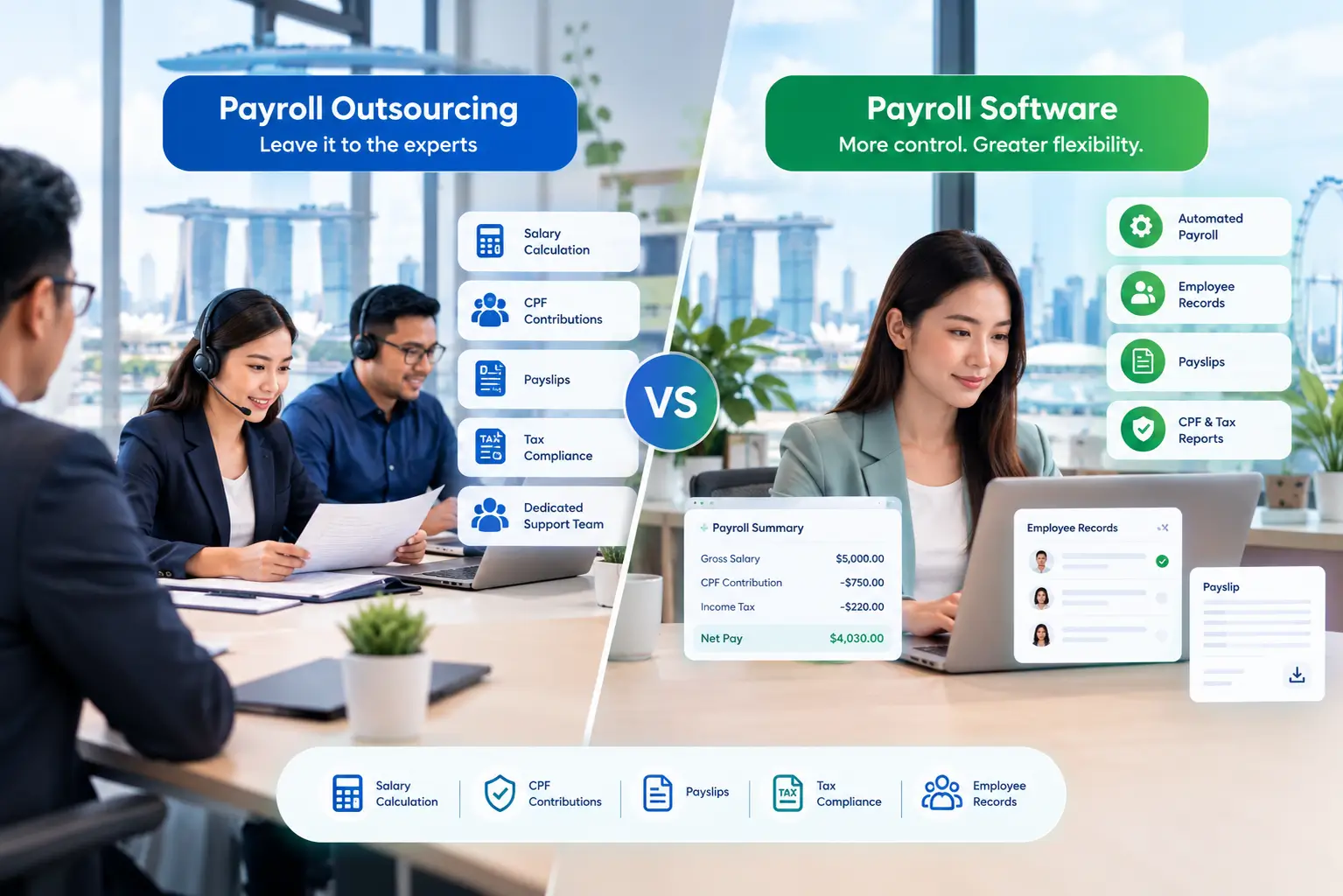
This is really a choice between two different approaches — payroll outsourcing and payroll software — and the debate around payroll outsourcing vs payroll software Singapore businesses face isn’t about which one is universally “better.” It’s about which one fits your headcount, your budget, and how much control you want to keep in-house.
This article breaks down how each option works, what they cost, and how to decide which one (or which combination) suits your SME.
Payroll outsourcing vs payroll software in Singapore represents two different ways for SMEs to manage payroll. Understanding how each approach works can help businesses compare control, internal workload, costs, and operational requirements.
Payroll outsourcing means handing your payroll processing to a third-party provider who calculates salaries, manages statutory contributions, and issues payslips on your behalf. Instead of running payroll internally, your company sends employee data to the provider each cycle, and they handle the calculations, submissions, and reporting.
For many small business owners, this feels like the simplest way to make sure payroll gets done correctly without hiring a dedicated payroll specialist.
The typical workflow looks like this:
Some providers offer a fuller service that includes bank file preparation, year-end tax form generation, and advisory support on payroll queries. Others offer a narrower scope, so it’s worth clarifying exactly what’s included before signing on.
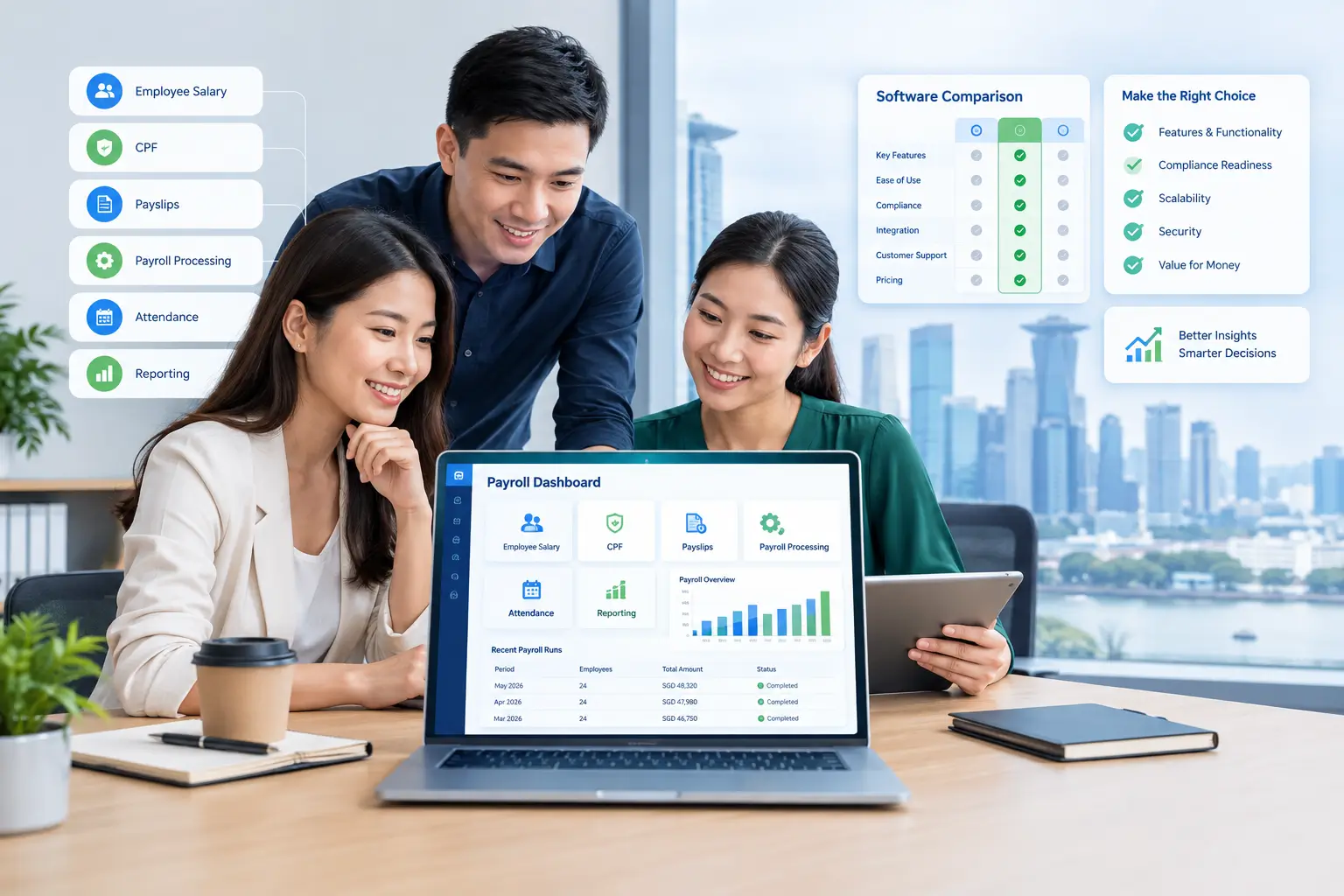
Payroll software is a system that automates payroll calculations, CPF computations, payslip generation, and tax reporting, while keeping the process managed by your own team. Rather than sending data to an external party, your HR or finance staff run payroll directly within the platform.
Most payroll software follows a similar cycle:
A growing SME might otherwise spend several hours each month manually cross-checking attendance records, recalculating salary adjustments, and preparing payslips one by one. Payroll software automates much of that repetitive work, so the same tasks might take a fraction of the time.
Yes — many SMEs use a hybrid model rather than treating this as a strict either/or decision. A company might run day-to-day payroll processing on its own software, while still engaging an external accountant or payroll consultant for year-end tax filing, complex cases (such as work pass cancellations or cross-border payments), or periodic compliance reviews.
1.Is payroll outsourcing cheaper than payroll software?
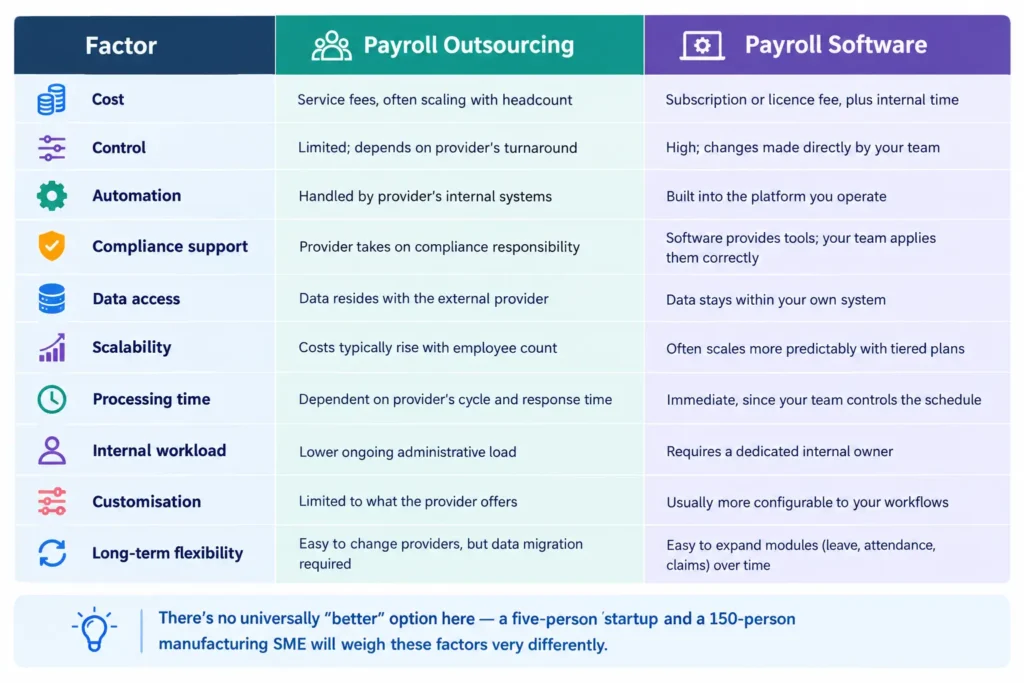
It depends on your headcount and needs. Outsourcing fees often scale per employee, so costs can rise as your team grows. Payroll software is usually priced on a subscription basis, which may offer more predictable long-term costs, but it also requires internal staff time to operate. Rather than comparing headline prices, calculate the total cost — including staff time — at your current and projected headcount.
2.Is payroll software suitable for SMEs?
Yes, many payroll software platforms are built specifically for SMEs, with pricing and features scaled to smaller teams. The suitability depends on whether your business has someone able to manage the system, even with automation reducing the manual workload. For SMEs with straightforward payroll needs and a team member who can own the process, software can be a practical and cost-effective option.
3. Is payroll software compliant with Singapore requirements?
Payroll software can support compliance with CPF, MOM payslip, and IRAS reporting requirements, but the software itself doesn’t guarantee compliance — correct setup and ongoing use matter too.
4.Can a small business switch between outsourcing and software later?
Yes, businesses often switch as they grow. A common path is starting with outsourcing when headcount is small, then moving to in-house software once processes become more complex or predictable enough to manage internally. Data migration and staff training are the main considerations when switching either direction.
Payroll outsourcing and payroll software solve the same underlying problem — accurate, compliant, on-time payroll — in different ways. Outsourcing can reduce the internal payroll workload and hand compliance responsibility to a specialist. Payroll software gives you more control, faster turnaround, and automation that scales with your business, particularly when it’s integrated with related functions like leave management and attendance tracking.
The right choice ultimately comes down to your company’s size, internal resources, payroll complexity, budget, and where you plan to be in a few years. Some SMEs will find a hybrid approach — running software internally while keeping specialist support on standby — works best of all.
For businesses exploring the software route,Adaptive Pay’s HRMS brings payroll, leave, attendance, and claims together on one platform, built around Singapore’s statutory requirements. Whether you outsource, automate, or combine both, the goal is the same: payroll that’s accurate, on time, and one less thing to worry about each month.
Manage HR, payroll, attendance, leave, and employee operations in one powerful HRMS platform to improve efficiency and simplify workforce management.
Enquire now to learn how we can build a solution for your business needs or speak with us for a free demo.
SMEs are eligible for up to 50% Productivity Solutions Grant (PSG) support for the adoption of Adaptive Pay, a Pre-Approved solution under the IMDA SMEs Go Digital programme.
A smarter way to manage payroll, attendance, claims and appraisals – all in one seamless platform




Copyright © 2026 – Adaptive Cloud Systems Pte Ltd