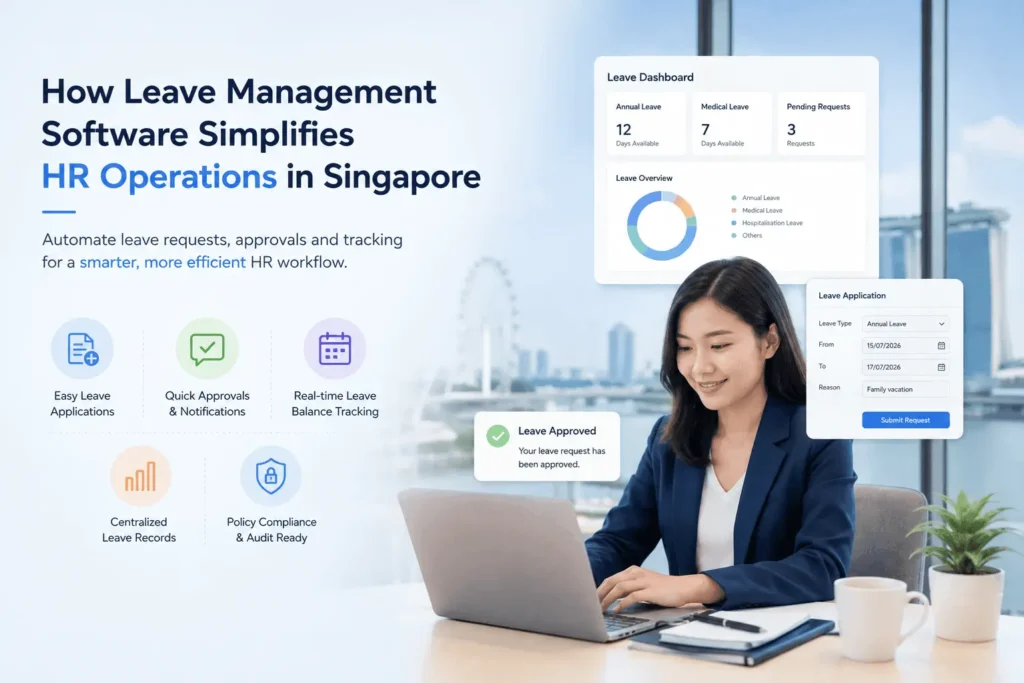
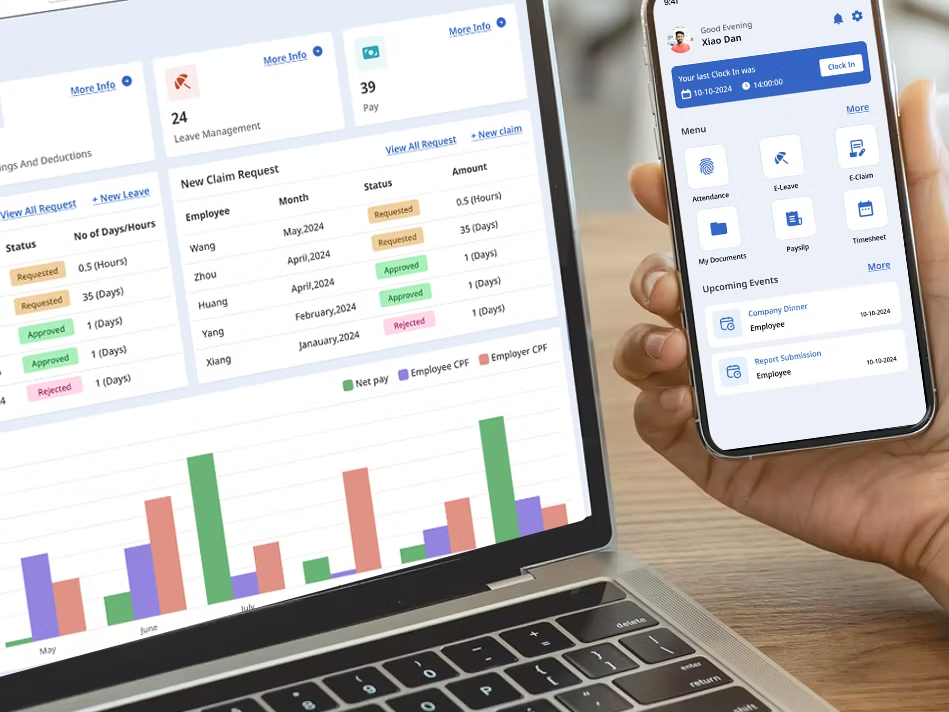
How Leave Management Software Simplifies HR Operations in Singapore An employee sends a leave request over WhatsApp. HR copies it into a spreadsheet. The manager approves it in a separate email thread, and somewhere along the way, someone forgets to update the leave balance. Two weeks later, payroll is being processed and nobody is quite sure whether the unpaid leave was recorded correctly. If this sounds familiar, you’re not alone. Most Singapore SMEs start out managing leave this way, and honestly, it works fine when there are ten or fifteen employees. The trouble starts when the company grows, more leave types get added, and HR ends up spending hours each week just keeping records straight. This is where leave management software comes in. At its core, it’s a system that brings leave applications, approvals, balances and records into one place, instead of scattering them across spreadsheets, emails and chat apps. This article looks at what it actually does, why manual tracking becomes a problem, and what Singapore businesses should consider before choosing a system. What Is Leave Management Software? Leave management software is a tool that lets employees apply for leave, lets managers approve or reject those requests, and keeps an accurate, up-to-date record of everyone’s leave balance. In under 60 words: it replaces manual leave tracking with a centralised system that handles applications, approvals, balance calculations and reporting, so HR doesn’t have to manually reconcile spreadsheets and email threads every time someone takes a day off. A basic leave tracker might just be a shared spreadsheet with some formulas. A proper leave management system goes further. It typically includes: Online leave applications, so employees don’t need to email or message HR directly Approval workflows that route requests to the right manager automatically Automatic leave balance tracking, including carry-forward and accrual Support for different leave types — annual, sick, unpaid, and others specific to the company A shared leave calendar so teams can see who’s away Notifications for pending approvals or upcoming leave Reporting for HR to review leave trends across the company A single source of truth that both HR and employees can refer to The difference matters. A spreadsheet can tell you what’s already happened, if someone remembered to update it. A leave management system is built to run the actual process — from the moment someone applies, through approval, right up to how it affects attendance and payroll. Why Manual Leave Management Becomes Difficult for Singapore SMEs Manual leave tracking works fine for small teams, but the cracks usually show up as headcount grows. Take a fairly typical case: a Singapore SME started with 20 staff on a shared Google Sheet, and it worked because HR knew everyone personally. By 50–100 employees across multiple departments, the same process broke down. Employees emailed HR just to check their leave balance, since they no longer trusted the spreadsheet. Overlapping leave requests slipped through unnoticed. Year-end carry-forward calculations took HR almost a week, since policies varied slightly by department. Common friction points at this stage include: Formula errors or accidental overwrites Employees repeatedly asking HR for their balance Approvals sitting unanswered in someone’s inbox Duplicate leave entries across files Difficulty tracking multiple leave categories Manually calculating pro-rated leave for new hires Carry-forward rules applied inconsistently Poor visibility into who’s on leave on a given day Extra reconciliation work at payroll time None of this means a company is non-compliant — it just means the process hasn’t kept pace with team size. This is usually the point HR teams start looking at leave management software. How Leave Management Software Simplifies HR Operations Employees Can Apply for Leave Online With leave application software, employees submit requests themselves — selecting leave type, checking their balance, and tracking approval status — without emailing or messaging HR. This cuts a large share of routine back-and-forth and reduces “how many days do I have left” questions almost immediately. Managers Can Approve Requests Faster Approval workflows route requests automatically: an employee applies, the manager gets notified, approves from their phone, and the balance updates itself — no manual spreadsheet edits, no approvals buried in inboxes. HR Gets a Centralised View of Leave HR can see who’s on leave, pending requests, upcoming absences, current balances, and historical records — all in one place, useful for both daily admin and planning around busy periods. Leave Balances Can Be Tracked Automatically Software handles balance calculations — carry-forward, pro-rating, leave taken — based on rules HR configures. It applies the rules; it doesn’t guarantee legal compliance on its own. HR still needs to set the policies correctly. Leave Data Can Connect With Attendance and Payroll This is often where the biggest practical gains show up. The flow is simple: leave request → approval → updated balance → attendance record → payroll. When approved leave feeds into payroll management, HR spends far less time reconciling numbers, with less risk of unpaid leave being missed at payroll. Singapore Leave Management: What Should Employers Consider? Singapore employers generally need to manage several categories of leave, including annual leave, sick leave, maternity leave, paternity leave, and childcare leave, alongside any additional leave the company chooses to offer as part of its own policies. Entitlements and eligibility conditions depend on factors like length of service and the terms of the Employment Act, and these rules can be updated over time. Because of this, it’s worth being precise about what’s what. Statutory leave refers to the minimum entitlements set by law. Company policy leave refers to anything additional a business chooses to offer, such as extra annual leave or flexible leave days. Software capability refers to what the system can track and calculate based on the rules HR configures — it doesn’t set the rules itself. For current and accurate statutory leave entitlements and eligibility criteria, employers should refer directly to the Ministry of Manpower (MOM) website, since requirements can change and this article isn’t a substitute for that guidance or for proper legal advice. How