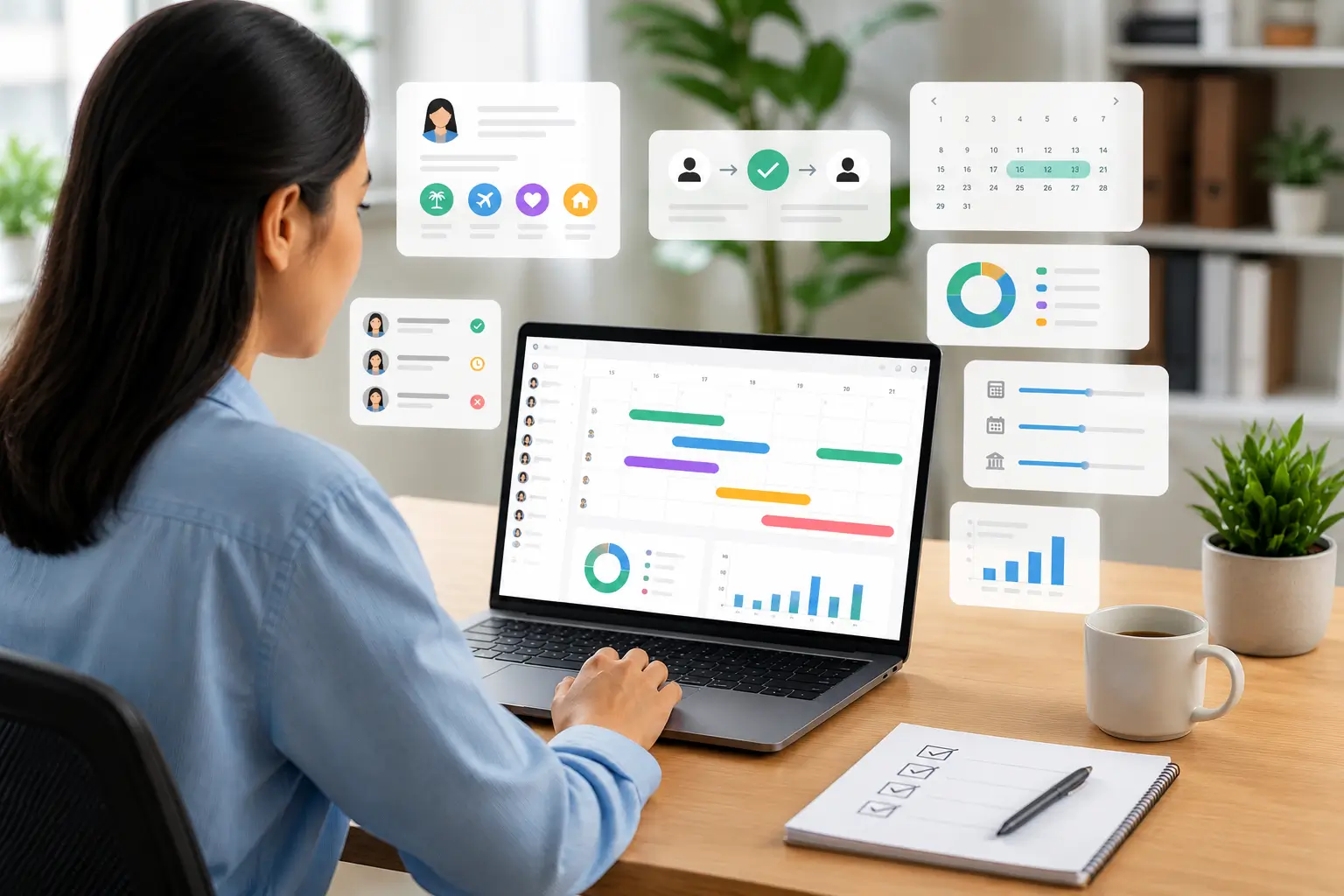
Integrated HR payroll system sounds like a software choice—but for many growing Singapore SMEs, it becomes the difference between a smooth month-end and a recurring cycle of edits, clarifications, and “can you resend the latest file?” When your employee master data, leave, claims, overtime, and payroll calculations don’t share the same source of truth, small mismatches turn into big downstream problems: wrong pay, delayed approvals, messy audits, and extra compliance stress.

This guide explains what “integration” really means, where data breaks most often, and how to evaluate a setup that supports Singapore statutory needs while still being practical for day-to-day HR work.
What “integrated” actually means (beyond a vendor checklist)
An integrated setup isn’t only “HR and payroll in one login.” It means key records are connected end-to-end so that once something is approved or updated, it automatically flows to where it’s needed—without re-keying and without conflicting versions.
- One employee profile used for HR records, payroll items, and reporting
- Approved leave updates attendance and payroll calculations automatically
- OT and shift records feed pay rules and payslip line items
- Claims and allowances can be governed with consistent policies and approvals
- Statutory outputs (e.g., reporting and contribution-related data) are generated from the same underlying records
Integrated HR payroll system: where SMEs feel the biggest impact
Most SMEs don’t decide to integrate because they “love systems.” They do it because headcount grows and the manual glue work starts to break. Here are the most common friction points integration solves.
1) Cleaner employee master data (the quiet root cause of payroll errors)
Payroll problems often start with basic fields: start dates, salary effective dates, job changes, or bank details. If HR updates one spreadsheet while payroll uses another, mismatches are inevitable. A unified employee profile reduces double maintenance and makes change history easier to track.
2) Leave and attendance stop being month-end surprises
Disconnected leave approvals create a familiar pattern: HR approves leave in one place, supervisors track attendance elsewhere, and payroll tries to reconcile it all right before cut-off. With module-level integration, approved leave can flow straight into attendance and payroll calculations. Adaptive Pay describes this “approved leave to attendance and payroll” flow as a core benefit of integrated modules in its leave system overview. Automatic integration with other modules.
3) Overtime calculations become auditable—not debatable
OT disputes usually happen when timesheets, rostering, and payroll formulas live in different tools. Integrated time and attendance data can feed the payroll engine directly, reducing manual edits and giving you consistent, reportable rules. Adaptive Pay notes that attendance data such as overtime hours, public holidays, and off-days can integrate into payroll to support accurate calculations. Time & Attendance Software Singapore.
4) Compliance readiness improves because you’re not hunting for data
Singapore employers deal with recurring statutory obligations. When employee income elements and benefits are scattered across multiple sources, reporting becomes harder—and errors become more likely.
- IRAS Auto-Inclusion Scheme (AIS): IRAS allows employers to submit employment income details electronically under AIS, reducing the need for issuing paper forms and improving efficiency. (iras.gov.sg)
- CPF obligations: Employers must pay CPF contributions (employer and employee shares) based on applicable rates and employee profile factors such as citizenship/PR status and age. (cpf.gov.sg)
When HR, leave, attendance, and payroll items are connected, you spend less time assembling “the full picture” and more time validating it.
Common data breakpoints (and how to prevent them)
If you’re growing fast, the goal is to remove repeatable failure points. Watch for these patterns:
- Multiple “sources of truth” for salary adjustments (offer letter vs spreadsheet vs payroll file)
- Manual allowances and claims added late, after payroll is already drafted
- Leave approvals outside the system (chat approvals, email approvals) that never make it into payroll rules
- Different cut-off dates across teams—HR, operations, finance—without a shared workflow
- No audit trail showing who changed what and when
Integration reduces these issues, but only if your processes are designed around the system. If you keep “shadow workflows” (WhatsApp approvals, offline trackers), the data will drift again.
How to choose an integrated setup without overbuying
For general WordPress readers evaluating systems for an SME, here’s a practical way to assess fit without getting lost in feature lists.
Start with three workflows that currently waste the most time
- Payroll close: How many back-and-forth cycles happen before payroll is final?
- Leave + attendance reconciliation: Where do discrepancies show up, and how late?
- Employee changes: Who updates records and how do you confirm payroll used the latest data?
Then validate these must-haves
- Employee master data controls (permissions, effective-dated changes, history)
- Approval workflows for leave, claims, and OT that match how managers actually work
- Reporting that works for finance (headcount cost views, allowances, OT summaries)
- Local statutory alignment (CPF and IRAS-related outputs)
- Implementation realism (data migration approach, training, and support)
Practical next step: map your “data flow” before you migrate
Before switching tools, draw a simple map of how data currently moves from event to payslip:
- Employee joins → onboarding fields captured
- Schedule/attendance captured → OT computed
- Leave approved → attendance updated
- Allowances/claims approved → payroll items created
- Payroll finalised → statutory reporting prepared
That map becomes your implementation checklist. It also clarifies which “integrations” are truly critical (automated data handoffs) versus nice-to-haves.
Recommended internal resource
If you’re exploring an all-in-one approach for Singapore requirements, start with the core platform overview and then drill into the modules your team struggles with most: Adaptive Pay HR & Payroll Management System.
FAQ
Do SMEs really need HR and payroll in one system?
Not always—but as headcount grows, the cost of reconciliation rises quickly. The tipping point is usually when month-end requires repeated data chasing across managers, HR, and finance.
Is integration mainly about saving time?
Time is the first win, but accuracy and traceability matter just as much—especially when you need consistent records for employee questions, audits, and statutory submissions.
What’s the easiest place to start integrating?
Most SMEs see fast improvement by connecting leave + attendance to payroll first, because that’s where late changes and disputes most often occur.